Undergraduate Program

BS Software Engineering

Introduction

The Software Engineering program at Salim Habib University is dedicated to producing highly skilled and adaptable professionals who drive technological innovation and contribute to the global growth and success of various industries. Our comprehensive and rigorous curriculum equips students with the knowledge, skills, and mindset needed to excel in the ever-evolving field of software engineering. We foster a collaborative and inclusive learning environment, promote industry engagement, and emphasize the sustainable development of the global human society.

Why BS Software Engineering from SHU

International standard cutting-edge curriculum

Our Bachelor of Science in Software Engineering program offers a curriculum that incorporates the latest technological advancements and research. Designed to align with international best practices, our innovative coursework equips students with the essential skills and knowledge to succeed in a rapidly changing industry.
Second Slide

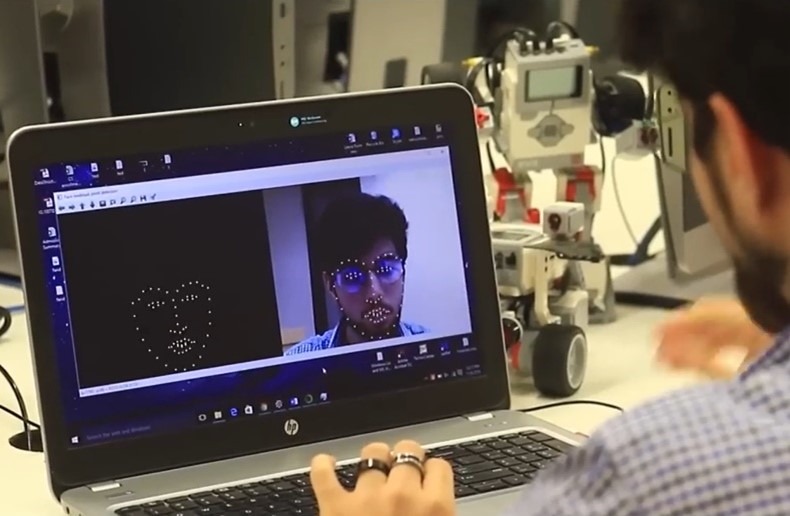
Advanced Laboratories for Applied Research

Our laboratories provide a dynamic environment for hands-on learning and research in software engineering. Students engage in real-world problem-solving, developing and testing innovative software solutions. These labs support exploration in areas like AI, cloud computing, and cybersecurity. With industry-standard tools and technologies, students gain practical experience that bridges theory and application. The facilities foster creativity, collaboration, and technical expertise, preparing students for future challenges in the software industry.

Third Slide

Experiential and Project-Based Learning

We emphasize experiential and project-based learning methodologies to provide students with practical experience and problem-solving skills. This approach fosters critical thinking and innovation by involving students in real-world projects and collaborative research.

third Slide

Career-Oriented and Marketable Skills

The curriculum is tailored to cultivate career-focused competencies and entrepreneurial skills. Students acquire marketable expertise that prepares them for diverse professional opportunities and entrepreneurial ventures in the technology sector.

Second Slide

International Exposure and Mobility

Students benefit from opportunities for national and international exposure through participation in seminar, competitions and exhibitions. These experiences enhance their global perspective, expand professional networks, and enrich their academic journey.

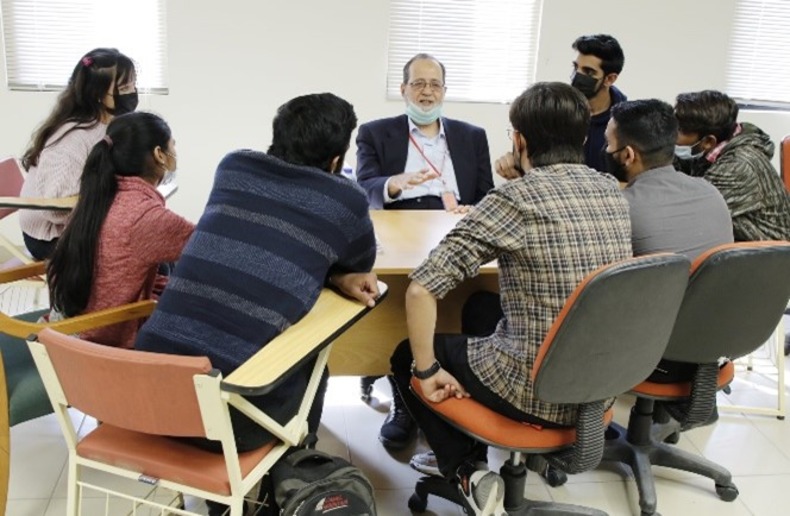
Expert Faculty Guidance

Our highly experienced and well-qualified faculty members provide exceptional support and guidance throughout the program. Their expertise and industry experience play a crucial role in mentoring students and advancing their academic and professional growth.
First Slide
Industry Mentorship

Our program offers mentorship from industry professionals to support the development of entrepreneurial ideas. This guidance helps students refine their projects, navigate industry challenges, and transform innovative concepts into viable business solutions.

About Program

  1. PO1: Apply software engineering principles and practices to develop reliable and scalable software systems that solve real-world problems.
  2. PO2: Demonstrate ethical responsibility, leadership, and a commitment to using software engineering for the betterment of society, economy, and environment.
  3. PO3: Pursue lifelong learning, advanced education, or research in software engineering to adapt to evolving technologies and global challenges.
  • Software Houses
  • Technology Incubators
  • E-Commerce Startups
  • Government Agencies
  • Financial Institutions/Banks
  • Multinational Corporations
  • Startups or Freelancing
  • Applications Analyst
  • Information Systems Manager
  • Software Tester & Quality Assurance
  • Game Developer
  • Systems Analyst & Developer
  • Forensic Computer Analyst

All requirements laid down by NCEAC will be followed.

  • Intermediate / HSSC: Minimum 50% overall marks in FSc, Pre-Engineering, Pre-Medical, General Science, or DAE equivalent.
  • An equivalency certificate by IBCC will be required in case of education from some other country or system.
  • The students who have not studied Mathematics at the intermediate level have to pass deficiency courses in Mathematics (06 credits) in the first two semesters.
  • The minimum duration for completion of BS Computing degrees is four years. The HEC allows a maximum period of seven years to complete BS degree requirements.
  • A minimum 2.0 CGPA (Cumulative Grade Point Average) on a scale of 4.0 is required for the award of BS Computing Degree.

Scheme of Study (Semester Wise)

BS (Software Engineering ) Scheme of Study
For Engineering Students
Semester – 1
Course TitleCredit Hours
ThPrTotal
Programming Fundamentals314
Application of Information & Communication Technologies112
Applied Physics303
Calculus and Analytic Geometry303
Islamic Studies202
Functional English213
Total17
Semester – 2
Course TitleCredit Hours
ThPrTotal
Object-Oriented Programming Prerequisites: PF314
Discrete Structures303
Ideology and Constitution of Pakistan202
Linear Algebra Prerequisites: CAG303
Digital Logic Design213
Expository writing303
Total18
Semester – 3
Course TitleCredit Hours
ThPrTotal
Multivariable Calculus Prerequisites: CAG303
Introduction to Management202
Computer Networks314
Software Engineering303
Data Structures Prerequisites: OOP314
Total16
Semester – 4
Course TitleCredit Hours
ThPrTotal
Probability and Statistics303
Artificial Intelligence314
Operating Systems314
Database Systems314
Information Security213
Professional Development000
Total18
Semester – 5
Course TitleCredit Hours
ThPrTotal
Computer Organization and Assembly Language Prerequisites: DLD213
Computing Internship011
Domain Elective (1)303
Software Requirement Engineering Prerequisites: Software Engineering303
Analysis of Algorithms303
Software Quality Engineering Prerequisites: Software Engineering213
Domain Elective (2)303
Total19
Semester – 6
Course TitleCredit Hours
ThPrTotal
Software Design and Architecture Prerequisites: SRE303
Software Project Management Prerequisites: SE303
Domain Elective (3)303
Domain Elective (4)303
Parallel & Distributed Computing Prerequisites: OS303
Total15
Semester – 7
Course TitleCredit Hours
ThPrTotal
Final Year Project – I033
Domain Elective (5)303
Domain Elective (6)303
Software Construction and Development Prerequisites:SDA213
Introduction to Marketing303
Technical & Business Writing Prerequisites: FE303
Total18
Semester – 8
Course TitleCredit Hours
ThPrTotal
Final Year Project – II Prerequisites: FYP I033
Civics and Community Engagement011
Professional Practices303
Entrepreneurship303
Domain Elective (7)303
Total12
Total Cr. Hour134
Scroll to Top